
The Best Wood for Every Woodworking Project: A Beginner-Friendly Guide
Choosing the right wood is one of the most important decisions you’ll make before starting any woodworking project. Whether you’re building rustic home décor, cutting boards, furniture, or handcrafted gifts, picking a wood species that suits the job would be recommended if you want a project that holds up well and looks great for years to come.
That’s exactly why I created the Wood Project Matrix Reference Guide — a simple, easy-to-use chart that helps you quickly narrow down which wood species would work well for different woodworking projects.
Why Choosing the Right Wood Matters
Every wood species has its own characteristics that affect how it looks, how it performs, and how easy it is to work with — especially if you’re just starting out.
Some woods are harder and more durable, which would make them a good option for furniture and cutting boards. Others are lighter, softer, and easier to cut and shape, which would suit decorative projects or pieces you plan to paint.
Choosing a wood that isn’t well-suited to your project could lead to some common frustrations, such as:
- More visible dents and scratches
- A higher chance of warping or cracking, especially with changes in humidity
- Uneven or disappointing finishing results
- A shorter lifespan for the finished piece
- Spending more on material than the project really needed
Getting familiar with the general strengths of each wood species can help you build with more confidence, and it would likely save you time, money, and a few headaches along the way.
(Quick beginner note: how a project turns out also depends on things like how well the wood is sealed or finished, how it’s stored, and how it’s used day to day — wood choice is an important piece of the puzzle, but not the only one.)
The 10 Wood Species Covered in the Guide
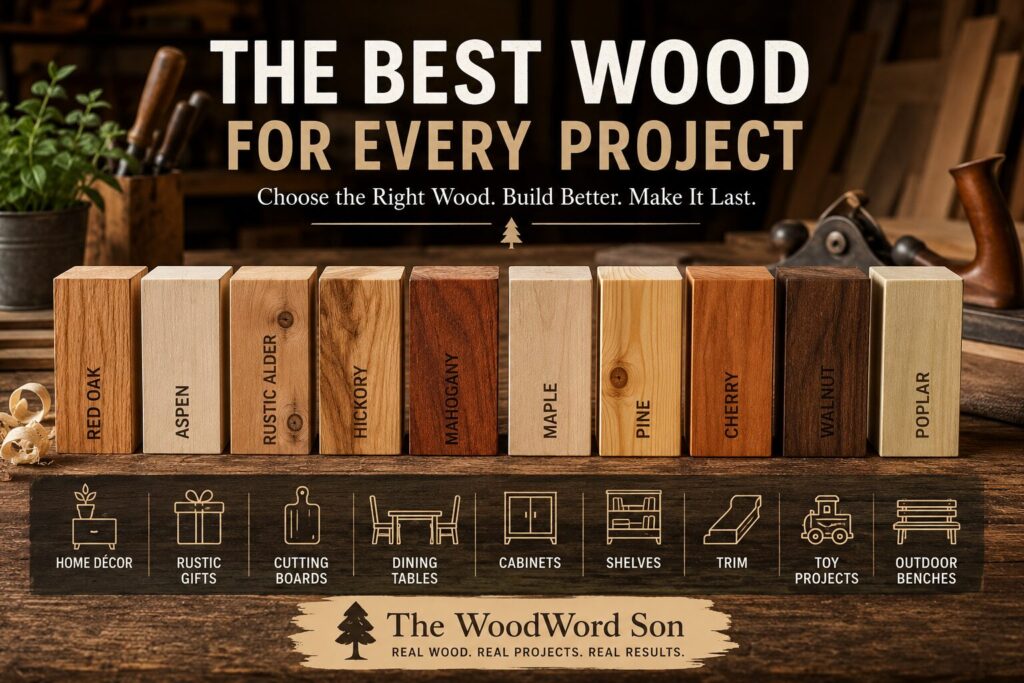
The Wood Project Matrix compares these popular woodworking boards:
- Pine
- Red Oak
- Aspen
- Rustic Alder
- Hickory
- Mahogany
- Maple
- Cherry
- Walnut
- Poplar
Each species is rated using a simple Best • Good • Avoid system across a variety of common woodworking projects, so you can compare them at a glance.
Projects Included in the Wood Project Matrix
The guide includes suggestions for:
- Small home décor
- Medium and large home décor
- Rustic home décor
- Rustic wooden gifts for men
- Rustic wooden gifts for women
- Cutting boards
- Dining tables
- Cabinets
- Shelving
- Interior trim
- Wooden toys
- Outdoor benches
Instead of reading through dozens of articles, you’ll be able to find a suitable wood option for your next project in just a few seconds.
Which Wood Would Work Best?
There isn’t one single “perfect” wood for every project — the right choice really depends on your budget, your skill level, and how the piece will be used. That said, a few species tend to stand out for certain jobs.
Maple Maple’s hardness and tight, closed grain would make it a solid choice for cutting boards, workbenches, and other projects that need to hold up to daily wear.
Walnut With its rich color and attractive grain, walnut would be a good option for furniture, heirloom-style gifts, and home décor pieces where appearance is a priority. It’s typically a pricier hardwood, so it’s often saved for smaller or special projects.
Cherry Cherry is popular for furniture, cabinets, and decorative work. It naturally darkens and deepens in color as it’s exposed to light over time (sometimes called developing a “patina”), which many woodworkers find appealing in a finished piece.
Red Oak A widely available, all-around hardwood that would work well for furniture, shelving, cabinetry, and interior trim. One thing worth knowing as a beginner: oak has a more open grain than woods like maple, so it’s generally not the top pick for cutting boards, where a tighter, less porous surface is easier to keep clean.
Hickory One of the hardest and strongest domestic hardwoods available, which would make it a good fit for heavy-duty furniture and projects that need to stand up to a lot of use. Because it’s so dense, it can also be more demanding to cut and shape by hand — something to keep in mind if you’re newer to woodworking.
Pine An affordable softwood that would be a great starting point for beginners, especially for farmhouse-style, rustic, or painted projects. Keep in mind pine is softer than the hardwoods on this list, so it dents and scratches more easily.
Poplar A budget-friendly hardwood that would work well for painted cabinets, utility projects, prototypes, and shop furniture. Its color can vary quite a bit from board to board, which is part of why it’s usually painted rather than left with a clear, natural finish. it is typically light, which makes it best for shipping.
Save Time on Every Project
Whether you’re picking up your first tool or you’ve been woodworking for years, having a quick-reference guide on hand would make choosing the right wood species much easier than relying on guesswork.
The Wood Project Matrix Reference Guide was designed to help you:
- Narrow down the right wood faster
- Reduce costly mistakes
- Compare common wood species at a glance
- Build projects with more confidence
- Improve the quality and longevity of your work
Keeping a printed copy in your workshop, or saving a digital version on your computer, would be a handy way to make sure it’s always on hand when you’re planning your next project.
Download the Free Wood Project Matrix
If you’re looking for a simple woodworking reference that takes some of the guesswork out of choosing lumber, download the Wood Project Matrix Reference Guide from The WoodWord Son.
It’s meant to be a resource you can come back to again and again — whether you’re building your first project or your hundredth.
Happy building!

